LUXCITY 2
LUXCITY 2
Luxury apartments — Street 163, Phnom Penh, Cambodia · Architecture concept design, 05/2024
|
Type |
Luxury apartments |
|
Location |
Intersection of Streets 163, 348 & 350, adjacent to BKK1/2/3, Phnom Penh |
|
Land area |
1.550 m² |
|
Footprint |
Total Area: 1,028 m² — Building Density: 66% |
|
Scale |
30 Storeys + 1 Basement (~8-storey podium & amenities, ~22 residential storeys) |
|
Units |
~190 units |
|
Efficiency |
70% · Floor Area Ratio (FAR): ~4.7 |
|
Unit mix |
1-Bedroom: 50% (48–65 m²) · 2-Bedroom: 30% (80–88 m²) · 3-Bedroom: 20% (140–170 m²) |
|
Build cost |
~ 500 USD/m2 of GFA ( Concept Stage) |
|
Target price |
~ 1.600 USD/m² gross |
|
Amenities |
Podium lobby & retail/café, sky garden, rooftop sky bar, gym, and swimming pool |
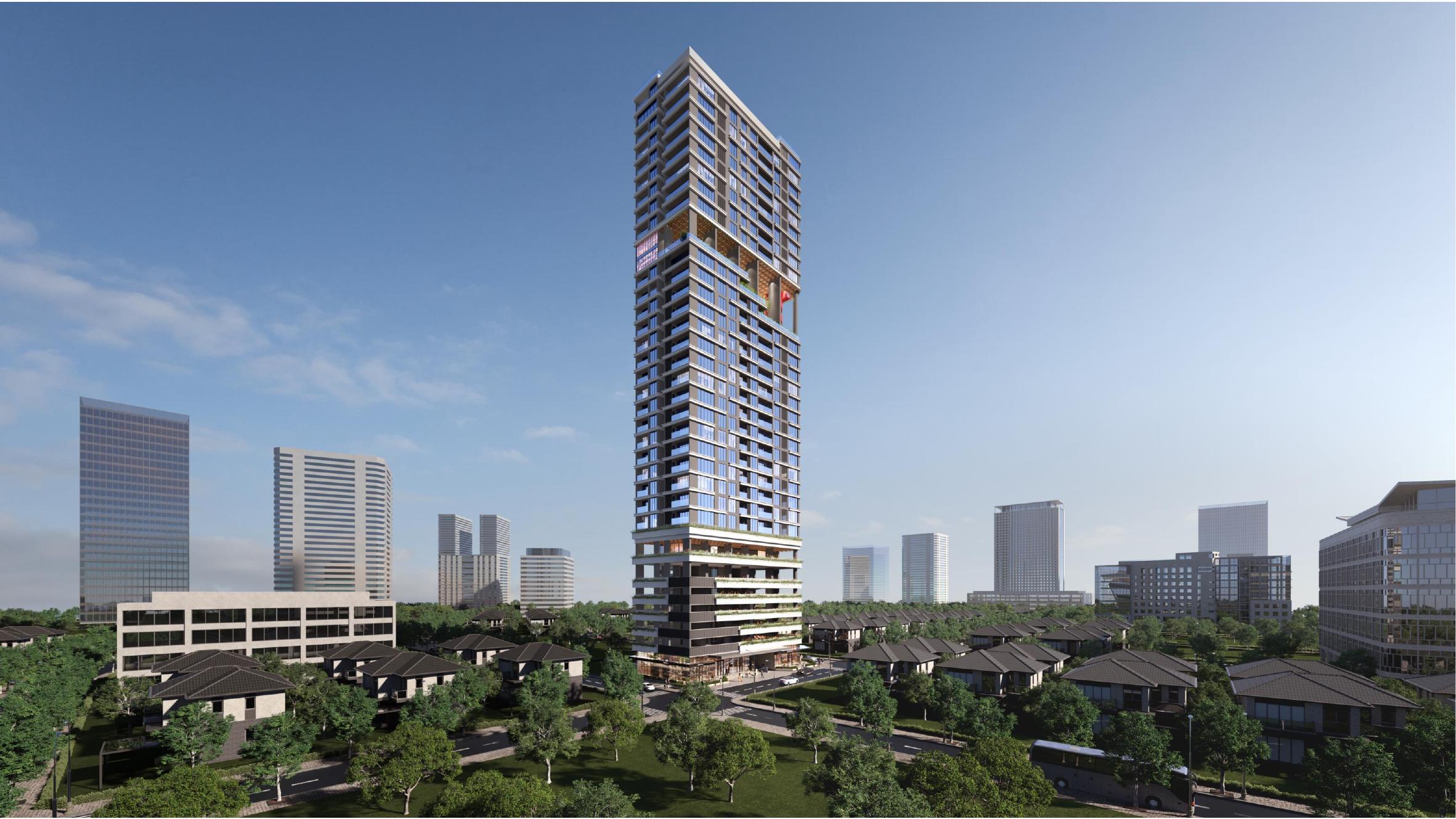
Acting as both design consultant and investment advisor, we approach this luxury apartment project on Street 163, Phnom Penh along two parallel tracks: the quality of the architecture and the efficiency of invested capital. On a 1,550 m² site adjacent to the high-end BKK1, BKK2 and BKK3 neighbourhoods, the 05/2024 concept design proposes a 30-storey tower with a retail-and-service podium, an optimised apartment layout and elevated amenities — a product that is both distinctive in image and sound in its financial logic.
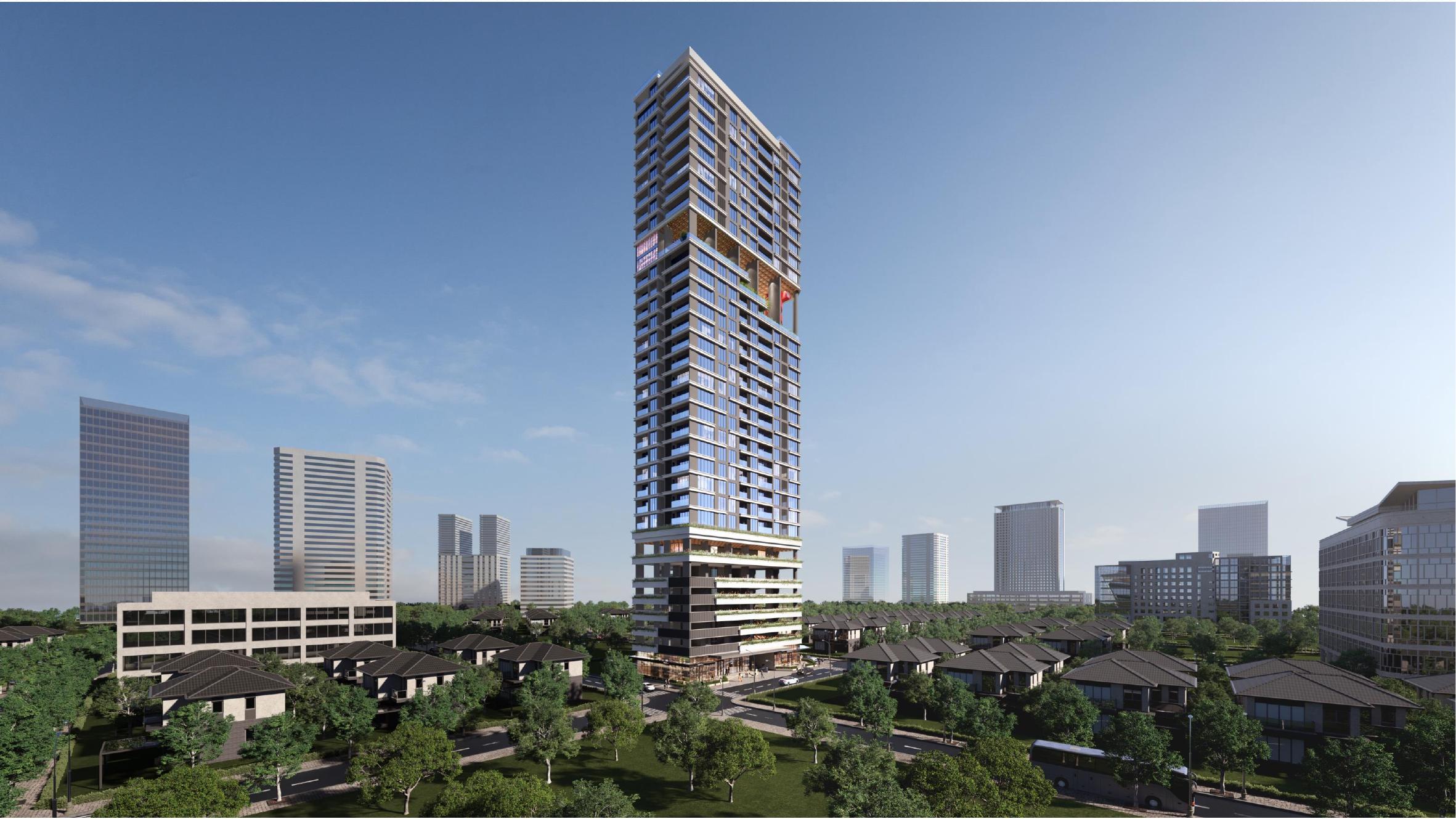
Overall perspective — a 30-storey tower standing out amid the CBD and the low-rise BKK districts
1. Context & investment location
Phnom Penh — Cambodia's capital and its political, cultural and commercial centre (population ~2.2 million) — is a growing apartment market that strongly attracts international tenants and investors. The site sits at the junction of Streets 163, 348 and 350, beside the BKK1/2/3 districts known for their trendy cafés, international restaurants and high-income residents. The three-frontage corner position gives the podium excellent commercial visibility and the apartment floors open views — two factors that directly drive the project's operating value and price premium.
2. Site constraints & technical basis
The scheme begins from the site's real constraints: a 1,550 m² plot, 4 m setbacks to the three streets and 2 m to the adjoining lot, and a permitted footprint of 1,028 m² (66% density). The terrain is relatively flat at ~+28 m above national datum. Geotechnically, the competent load-bearing stratum lies at 30–36 m depth; given the high-rise loads, the report recommends large-diameter bored piles founded on rock. A view analysis by level shows visibility blocked on floors 1–3, opening up from floors 3–10, broad views from floors 10–30, and full city panoramas from floor 30 to the roof — the basis for tiering product value by height.
3. Architectural design solution
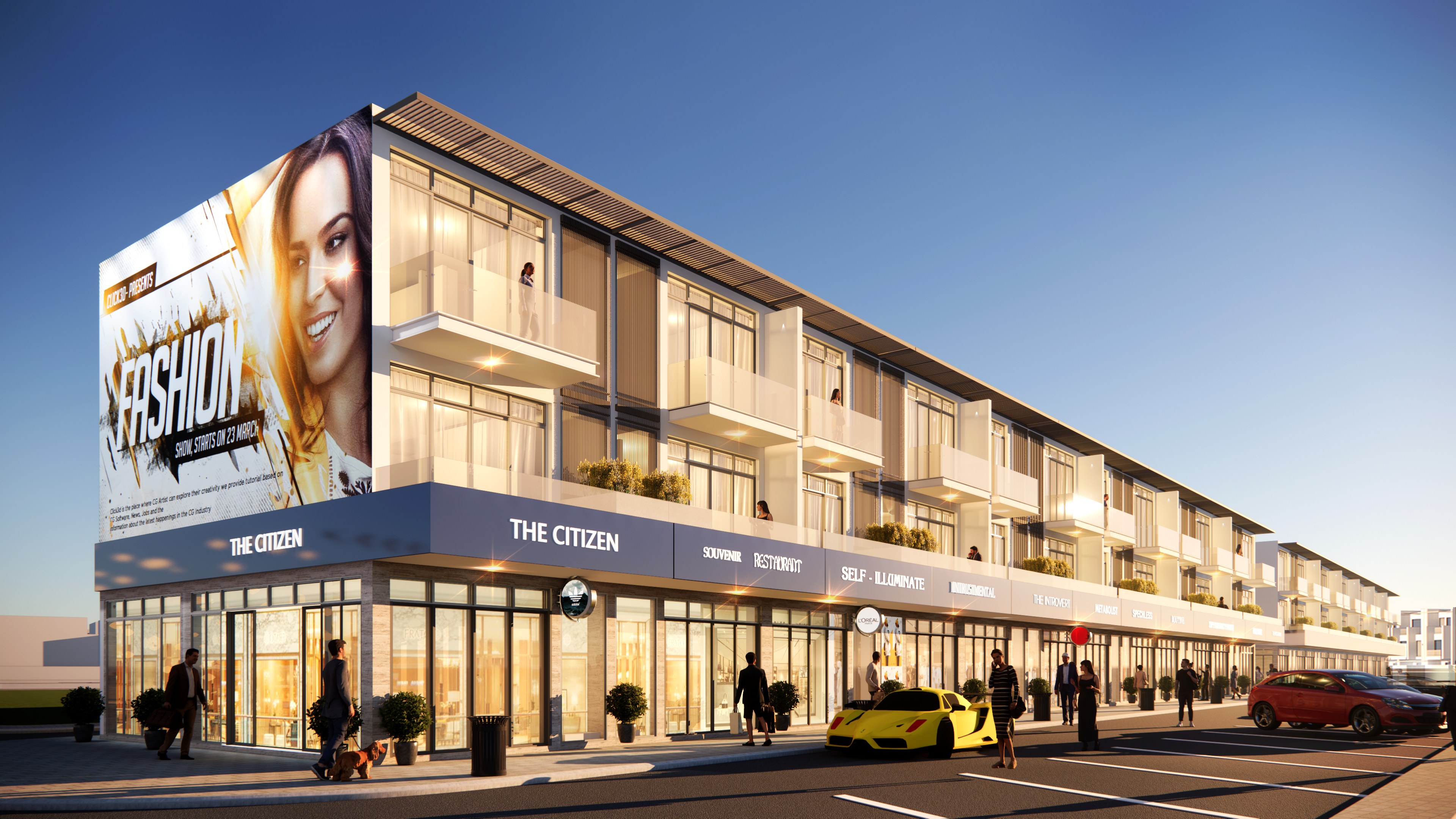
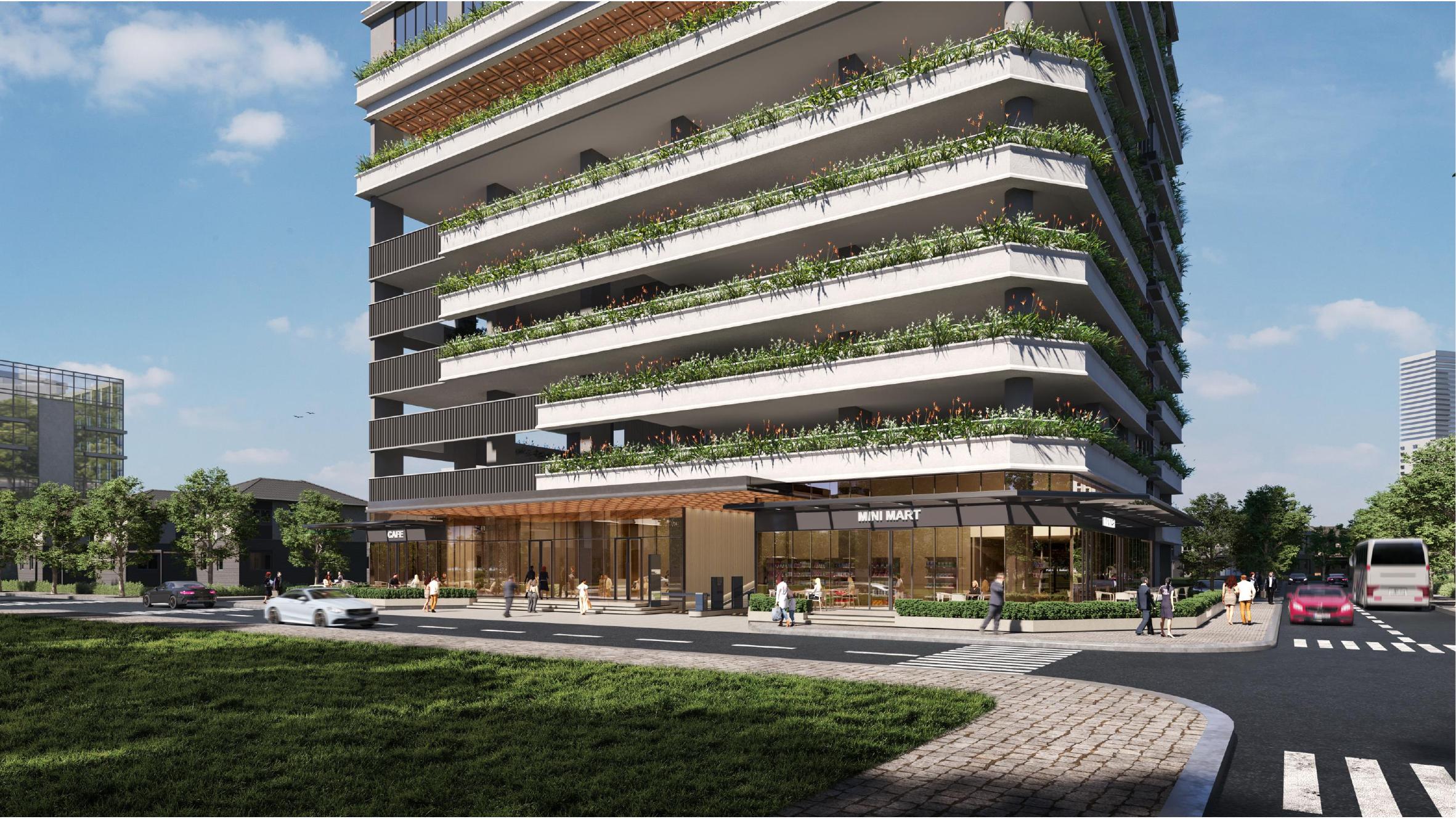
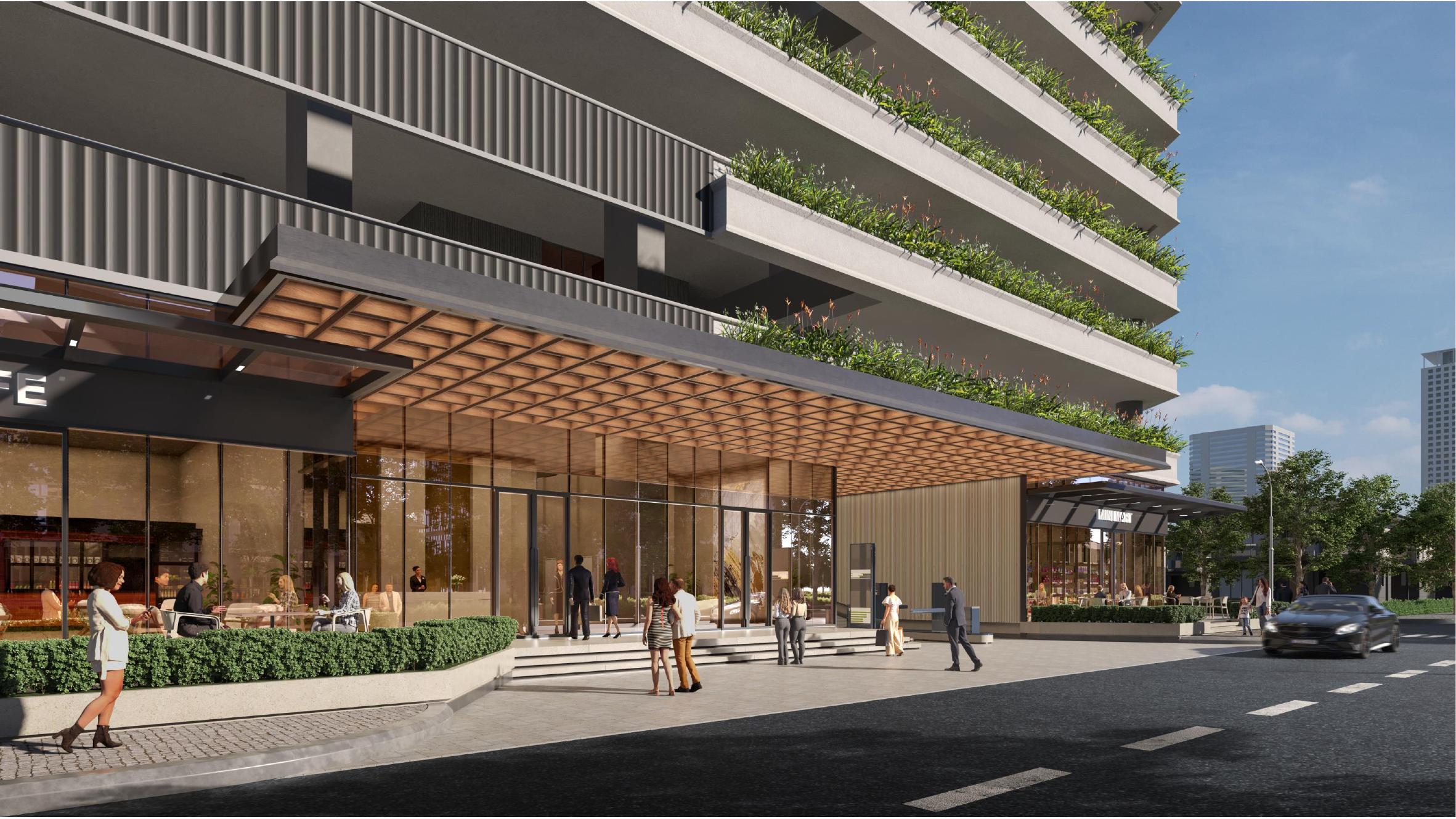
The building is organised into three clear value layers. The retail-and-service podium opens to all three street frontages with a main lobby, café and retail beneath a timber-lattice canopy, seamlessly connected so café guests can reach the shared amenities; parking is consolidated, disabled ramps are added and the ground level is re-graded to match existing conditions, improving on the earlier revision. The apartment tower employs a façade of horizontal louvres, glazing and planted balcony pockets that both control solar gain and give the building its identity. At the summit, a sky garden and sky bar with landscaping, a pool and full city panoramas form the signature that lifts the prestige and commercial value of the whole project.
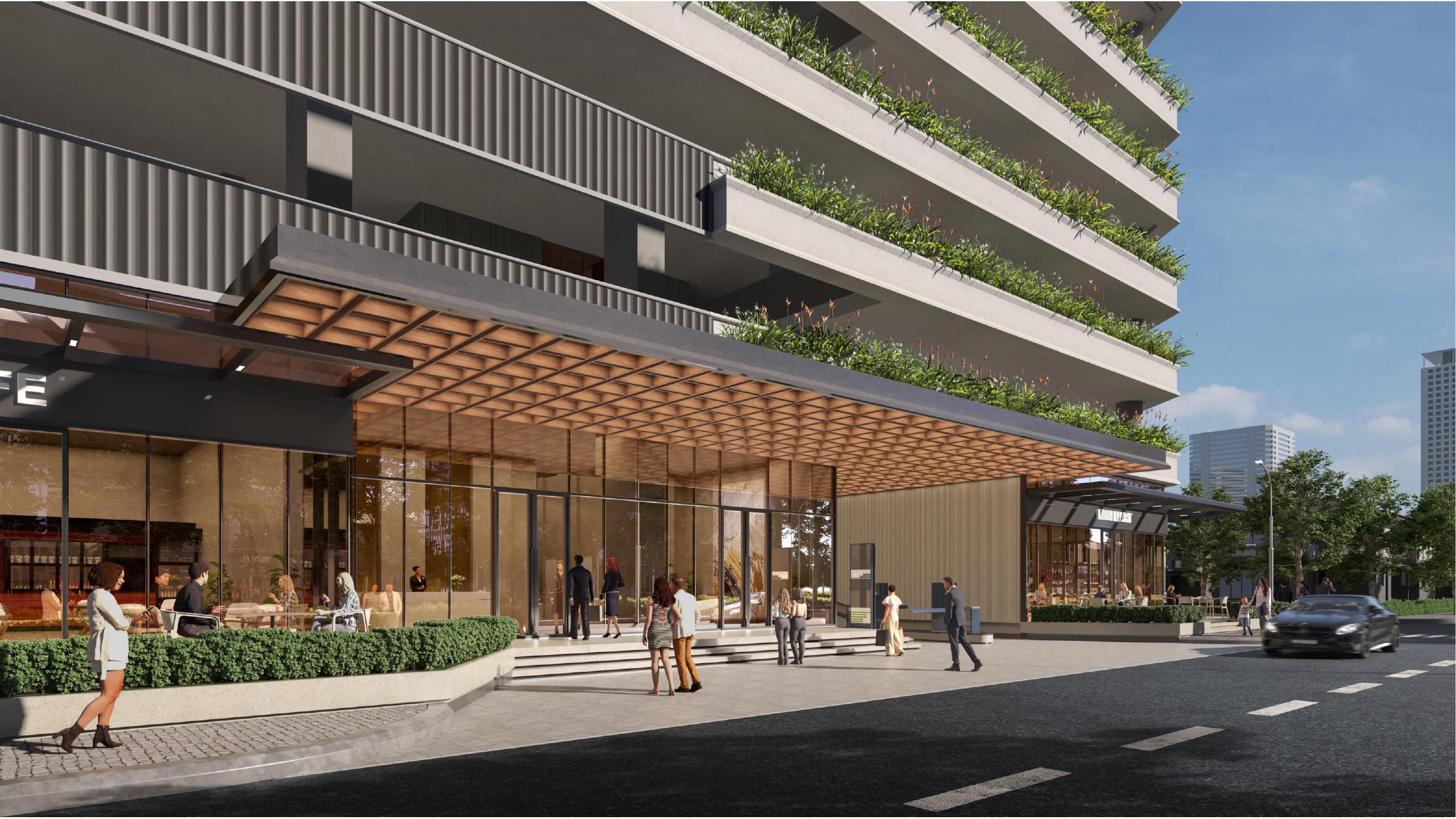
lobby & retail/café under a timber-lattice canopy, with greenery on the podium levels
4. Efficiency & product mix
Within the land budget and permitted parameters, the scheme delivers around 190 apartments across 30 storeys at a 70% efficiency ratio — a sensible balance between sellable area and technical/circulation space. The product mix follows market demand: one-bedroom units (48–65 m²) make up 50%, two-bedroom units (80–88 m²) 30%, and three-bedroom units (140–170 m²) 20%. The heavy weighting toward one- and two-bedroom units improves liquidity and cash flow, while the three-bedroom units and upper floors target the premium segment, capitalising on the view advantage and rooftop amenities.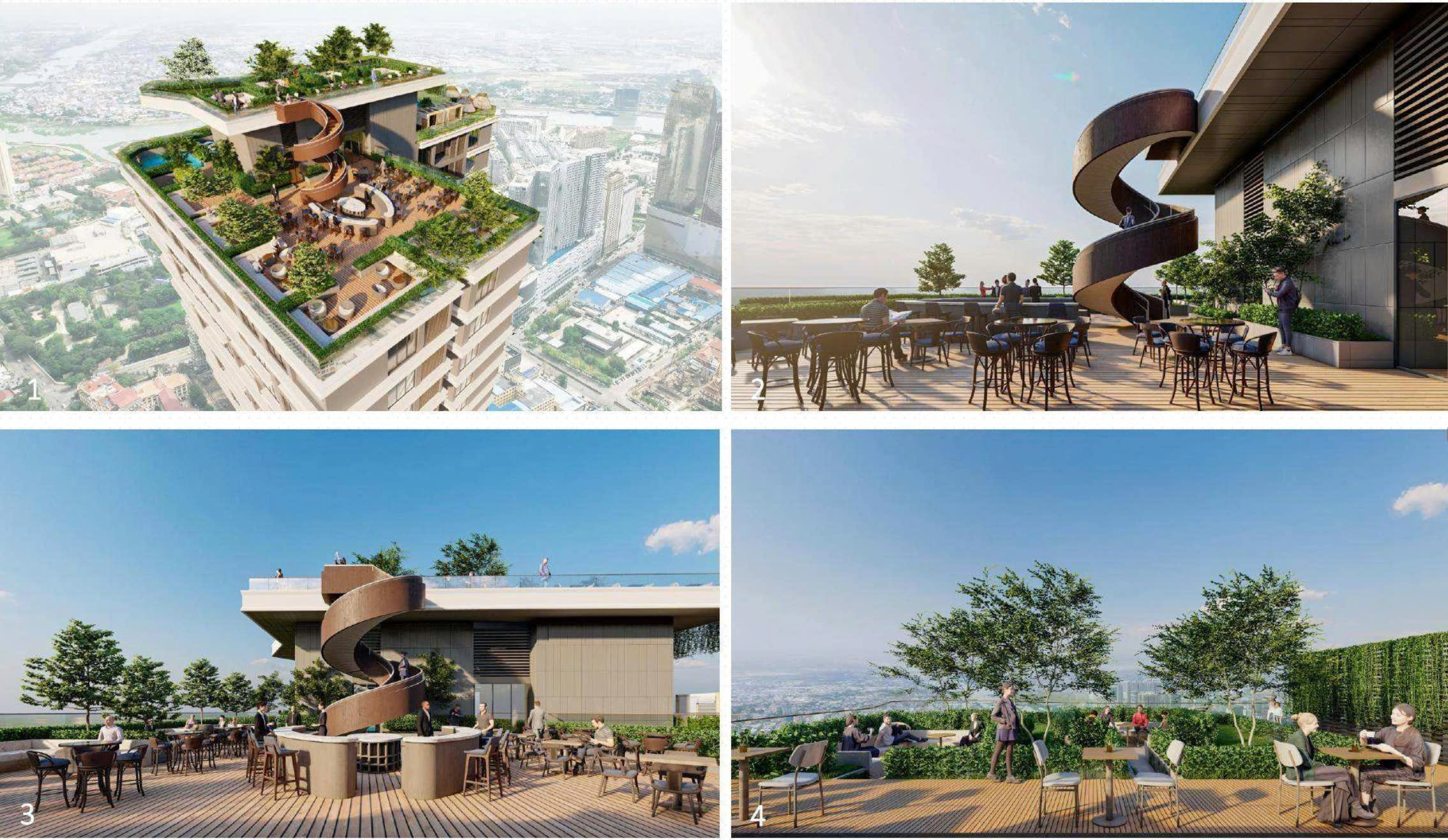
Rooftop sky garden & sky bar — landscaping, pool and panoramic city views
5. Investment advisory perspective
At concept stage, the investor targets a build cost of around 500 USD/m² GFA and an expected selling price of around 1,600 USD/m² gross. The gap between selling price and build cost leaves room to absorb the remaining costs — land, finance, design, sales and operations — plus the expected profit. Compared with similar-scale projects in the area (25–43 storeys) currently offered at around 2,300–3,150 USD/m², the 1,600 USD/m² target appears relatively conservative, leaving upside to raise prices over the sales timeline and across the higher-value tiers (views, rooftop amenities). The mix skewed toward smaller units, the focus on sellable area and the signature amenities are the main levers to improve total revenue and absorption.
Note: the financial figures above are concept-stage estimates for reference only, to be validated by a detailed feasibility study, and do not constitute investment advice.
6. An integrated advisory role
The project shows how we integrate design and investment advisory within a single process: every architectural decision — from the organisation of the podium and the tiering of value by view, to the apartment mix and amenity layout — is examined simultaneously through the lens of resident experience and capital efficiency. The ultimate goal is a real-estate product with a clear architectural identity, sound operation and durable investment value for the developer.