14-HA TOWNSHIP
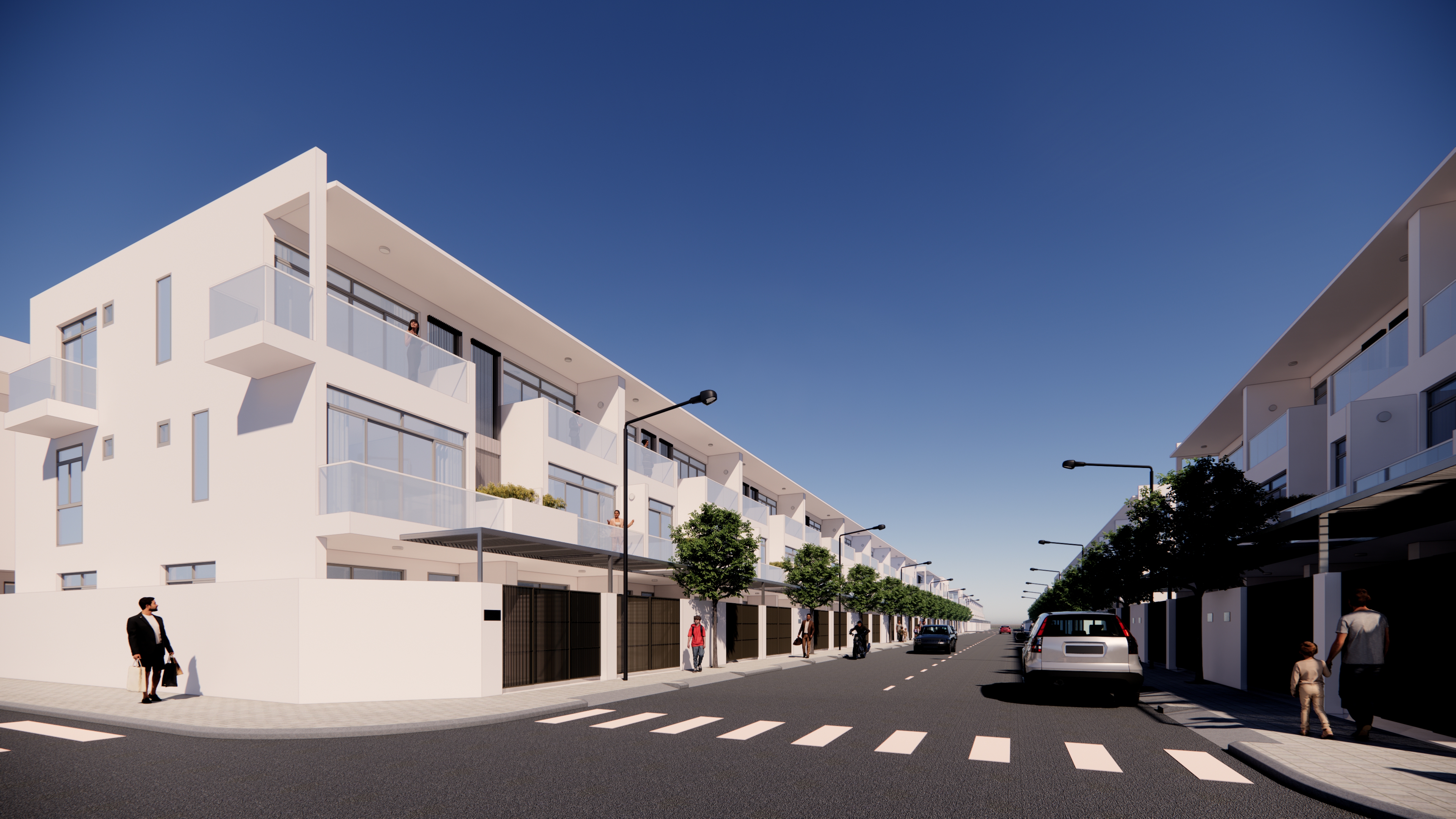
14-HA TOWNSHIP - Bavet, Campuchia
|
Type |
Mixed residential-commercial development |
|
Scale |
~14 ha |
|
Location |
Bavet, Cambodia (border SEZ city) |
|
Our role |
Design consultant & Project manager |
|
Scope |
Planning, architecture, structural–MEP coordination, technical documentation & delivery management |
|
Components |
Townhouses, shophouses, worker housing, warehouses, sports fields & greenery |
|
House types |
TH-01–04 · SH-01, SH-02 (A/B variants) |
|
Stage |
Concept (2022) → technical documentation (2023) |
Acting as both design consultant and project manager, we have accompanied the 14-hectare development in Bavet from the planning concept through the technical documentation and into delivery. On roughly 14 hectares in the border city of Bavet, the work is not only to create a modern architectural solution, but also to control the consistency, constructability and schedule of a large-scale project comprising several building types — townhouses, shophouses, worker housing and warehouses.
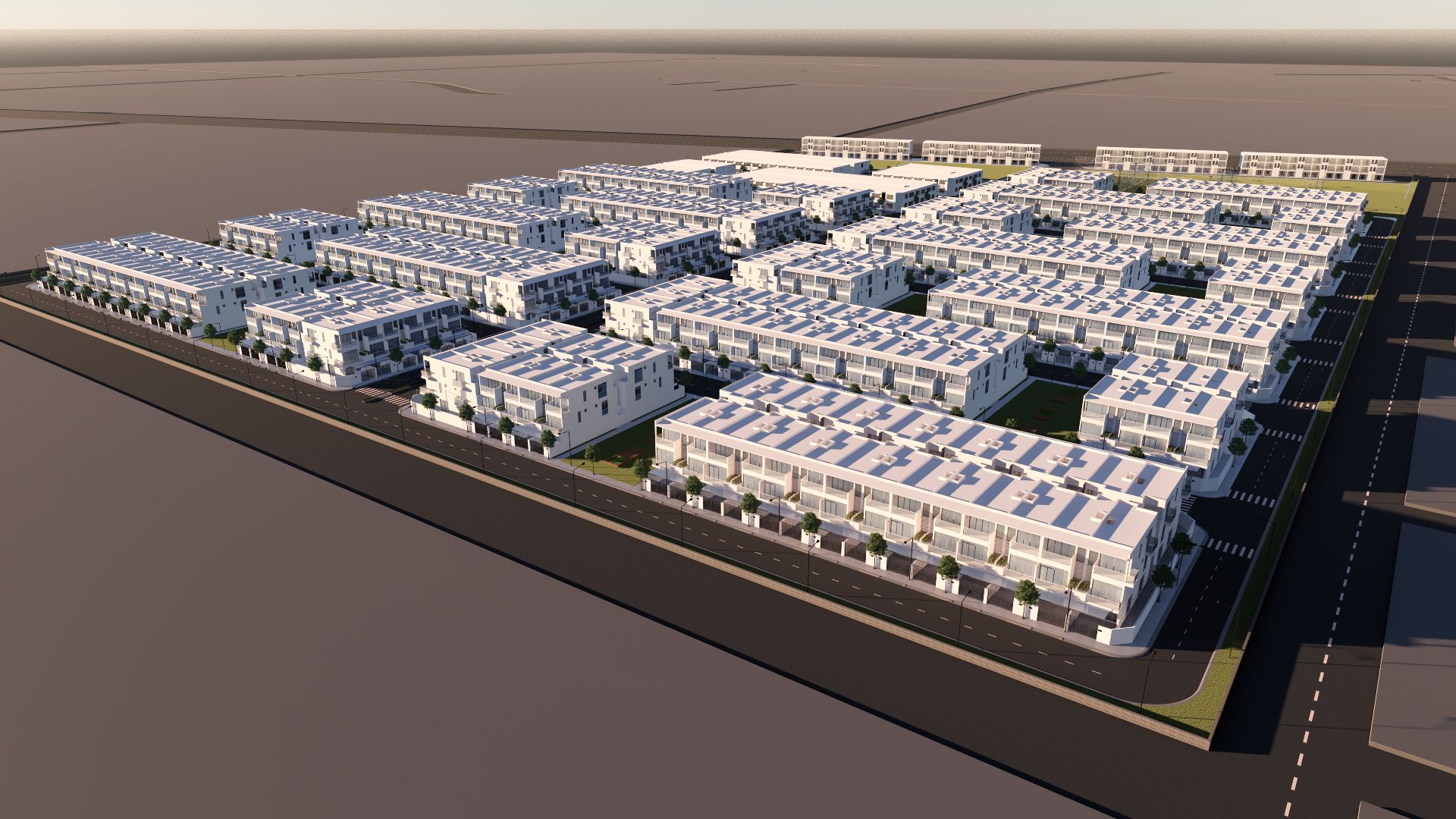
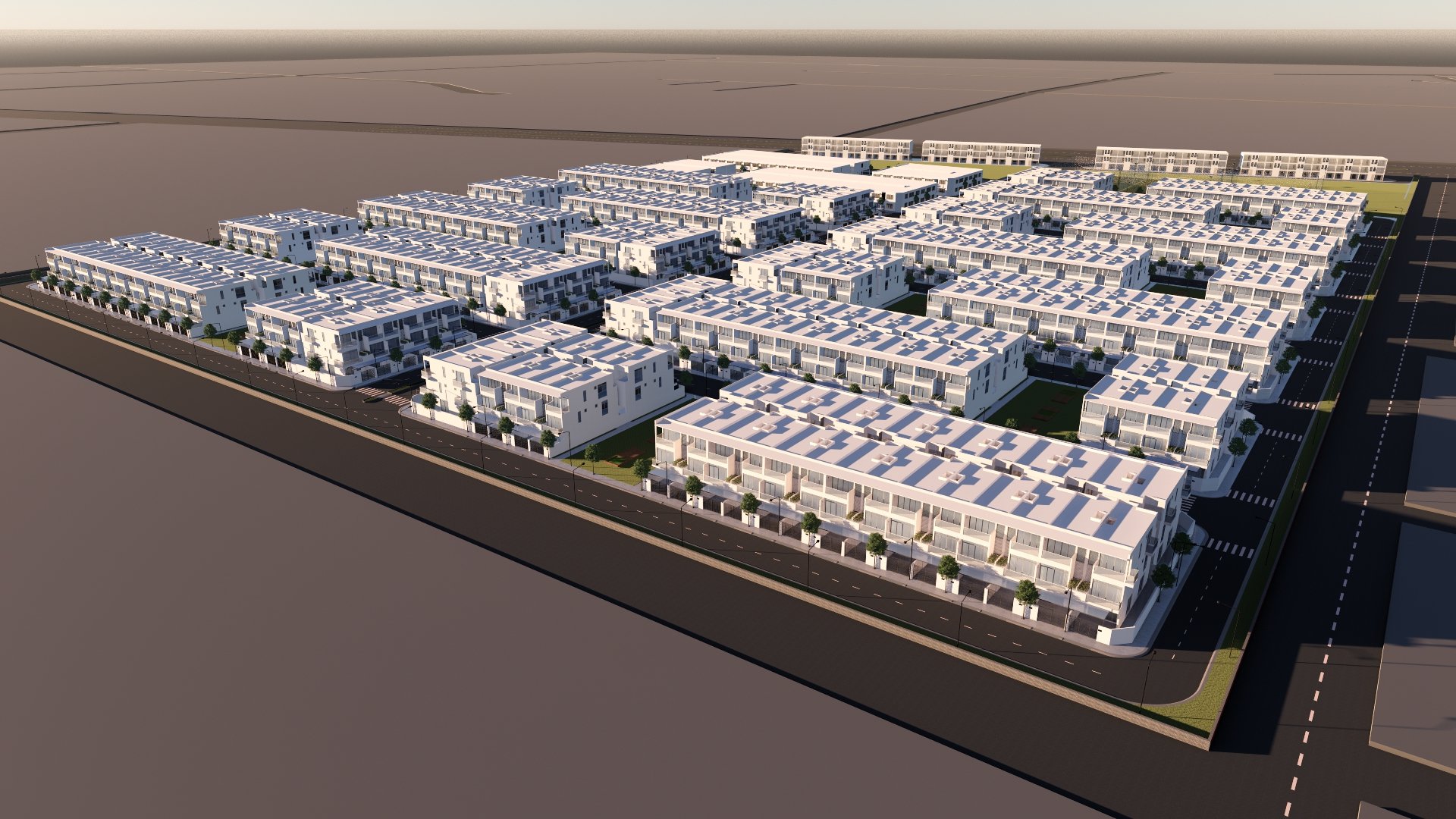
Master plan — the basis for coordinating design, phasing investment and managing delivery across the district
1. Advisory role & scope
As the design consultant, we are responsible for the master-plan direction, the architectural language and the set of design standards applied across the whole district. As project manager, we organise and coordinate the disciplines — architecture, structure and MEP — to ensure documentation that is consistent, complete and construction-ready. This integrated approach means every design decision is examined simultaneously through the lens of aesthetics, engineering, cost and schedule, minimising inter-discipline conflicts before they reach the site.
2. Planning & architectural solution
The trapezoidal site is organised around a central road axis, divided into accessible terraced rows on a grid. The strip along the major road holds warehouses, worker housing, a green buffer and sports fields; the inner zones contain the townhouse and shophouse districts. The whole development shares a unified modern, minimalist language with a predominantly white palette — establishing a recognisable identity while facilitating the standardisation of components and quality control of finishes at scale.
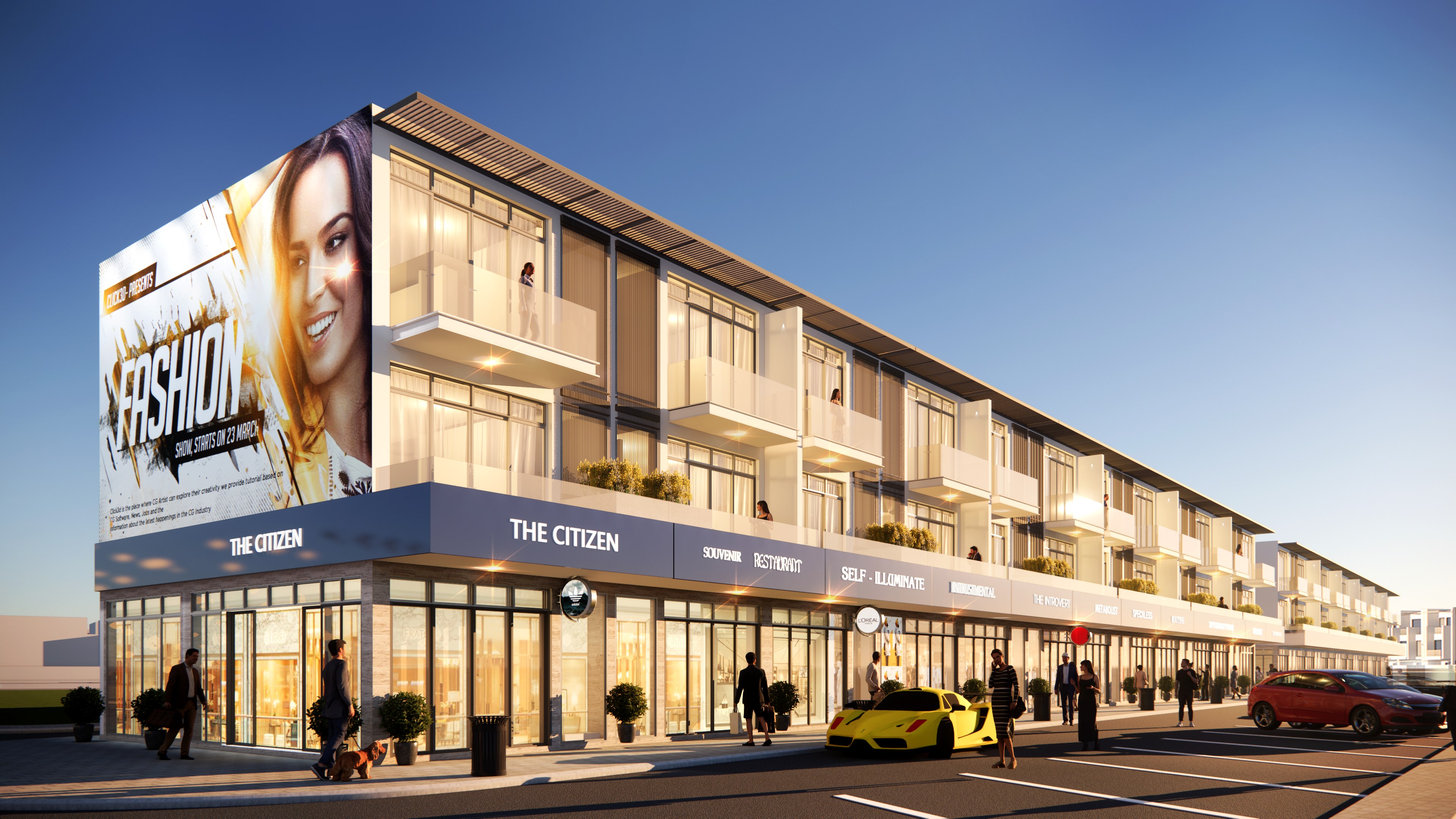
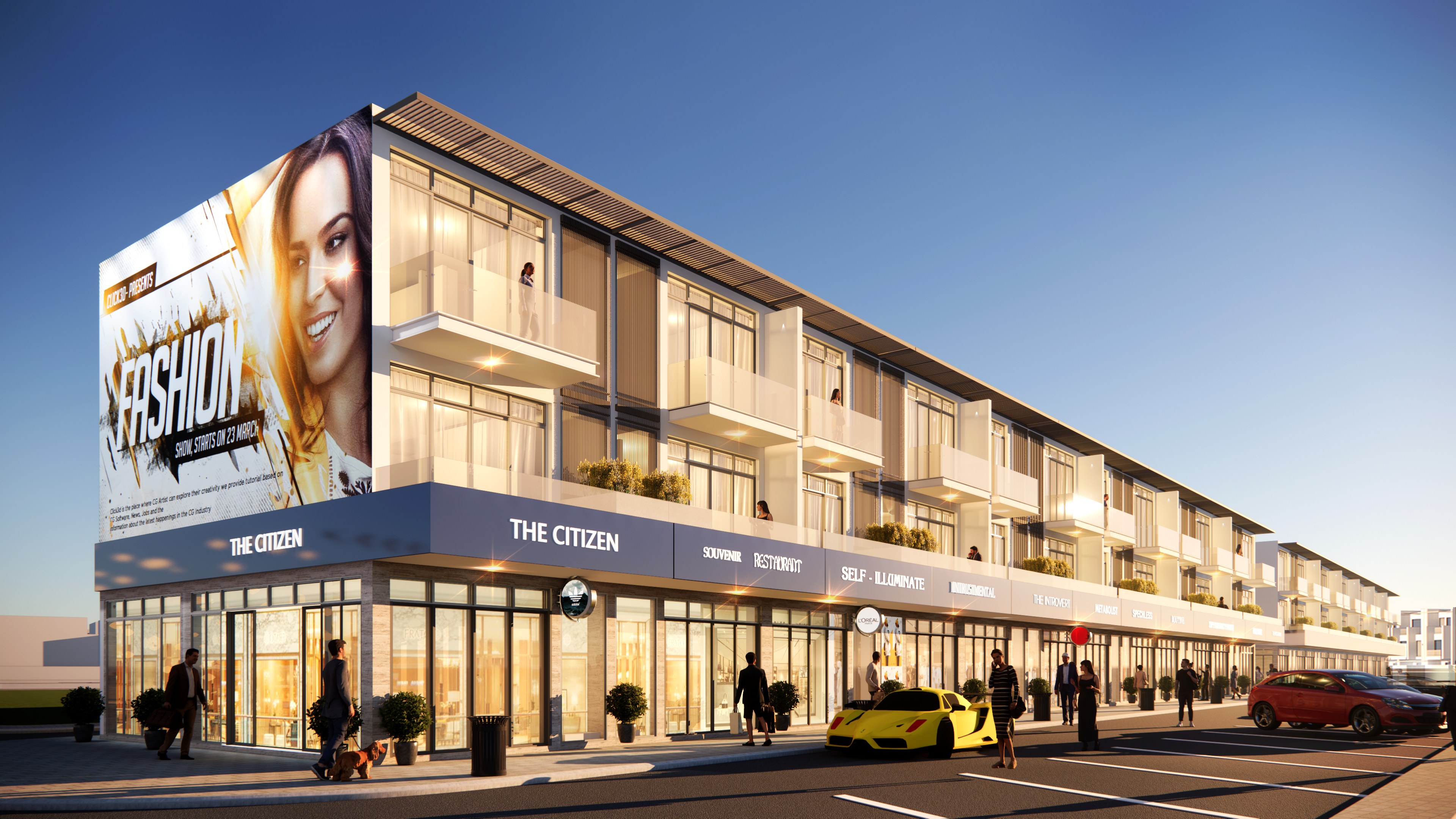
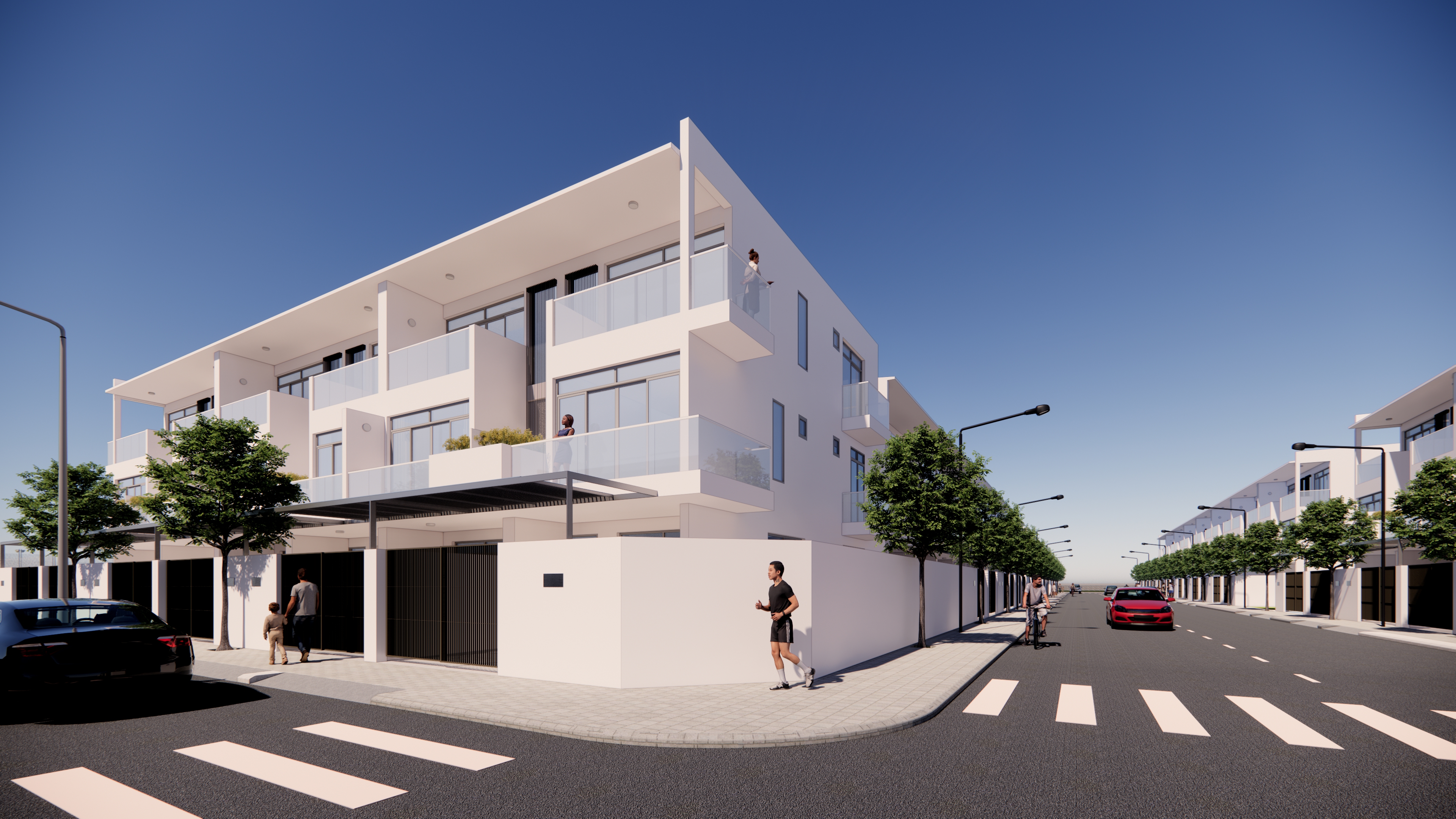
Street shophouses — commercial ground floor, residential above; standardised typologies repeated along the frontage
3. Design standardisation & documentation
The key to delivering a multi-building project efficiently is standardisation. Instead of designing each unit individually, we built a system of typical house types — townhouses TH-01 to TH-04 and shophouses SH-01, SH-02, each with A/B variants — to provide variety while optimising design, materials and construction effort. Each type is developed into a complete architectural-technical package (floor plans, wall notes, construction details, finish materials), providing a consistent basis for tendering, quantity take-off and repeated construction.
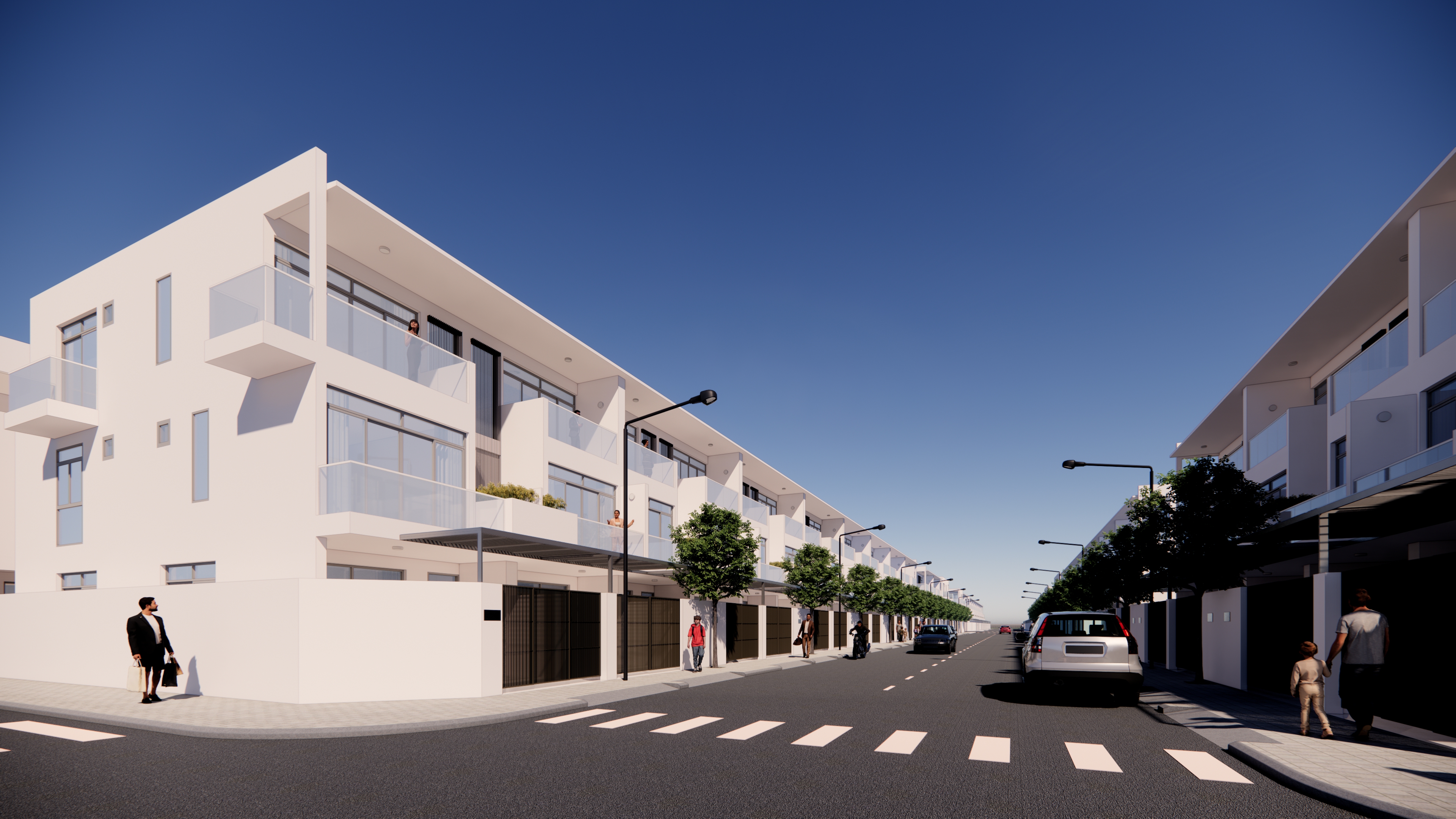
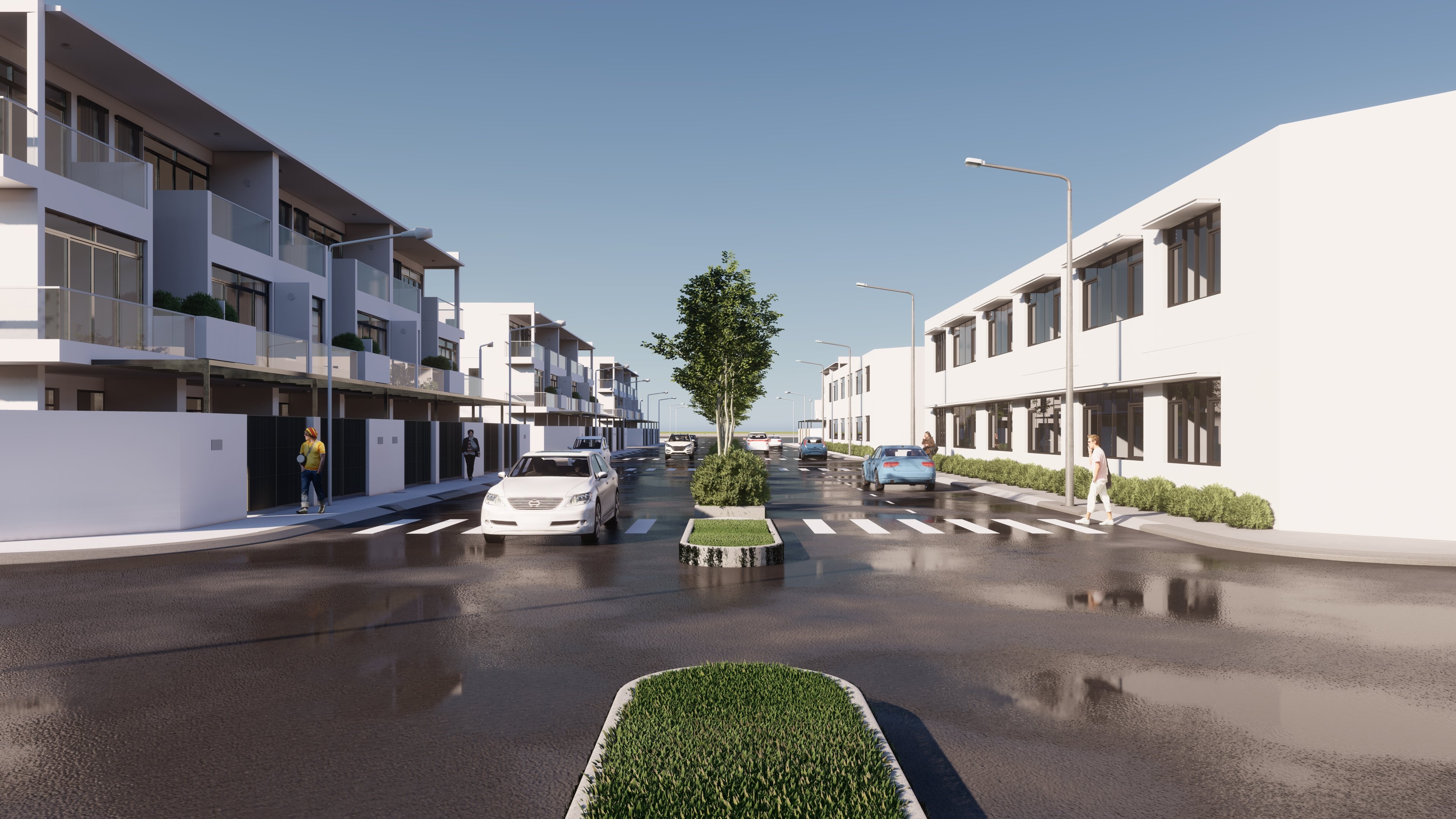
Typical townhouses — standardised facades and components support quality control and construction schedule
4. Delivery management & quality control
In the project-management role, coordination focuses on three axes: schedule, quality and inter-discipline fit. The standardised house-type system allows construction to be phased row by row and zone by zone — convenient for resourcing and staged handover. Structural and MEP documentation is closely coordinated with architecture to limit conflicts on site; technical infrastructure (a road hierarchy, water supply and drainage, fire protection, greenery) is planned from the outset. The goal is a smooth delivery process with controlled costs and consistent quality across the whole development.
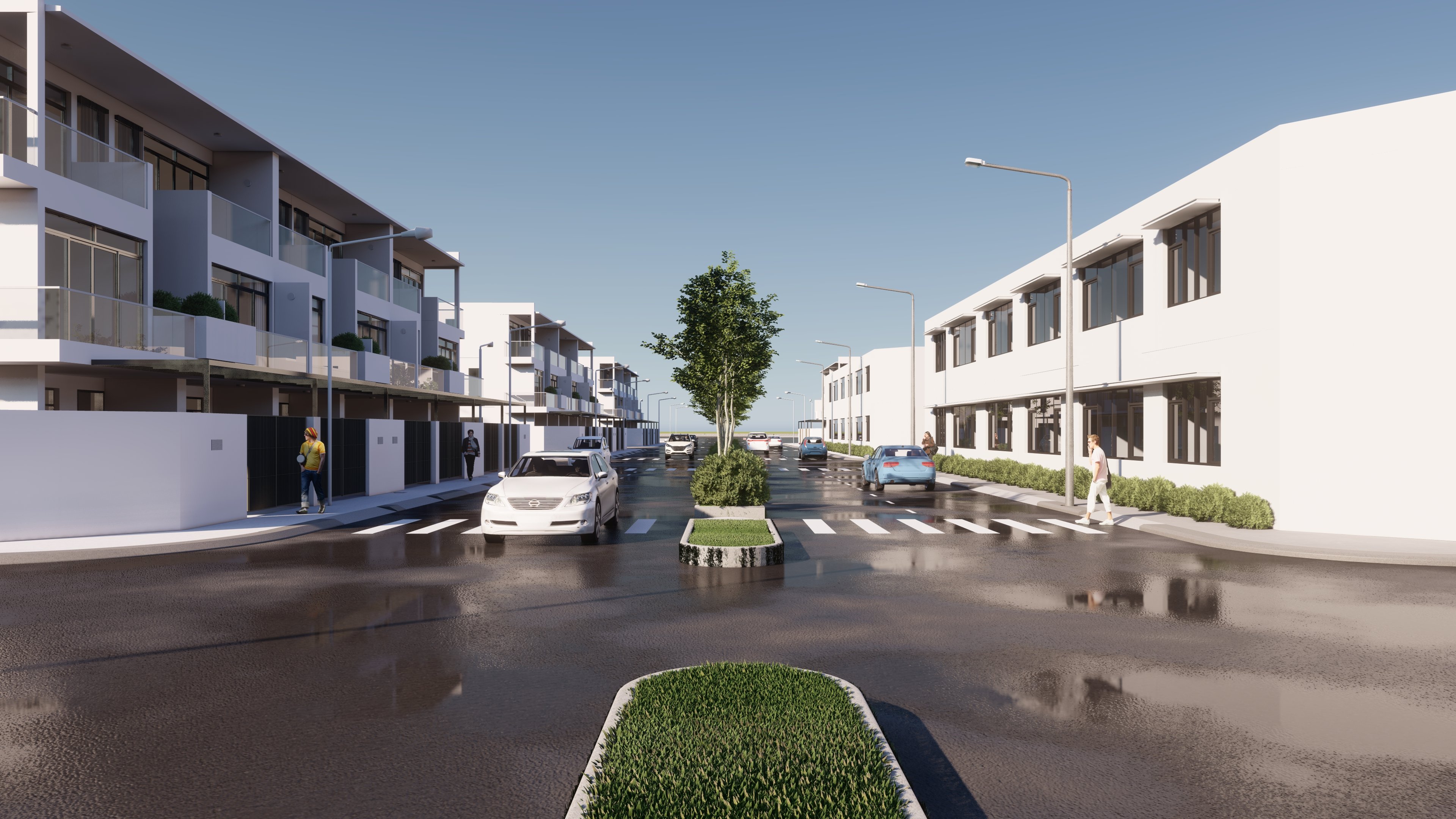
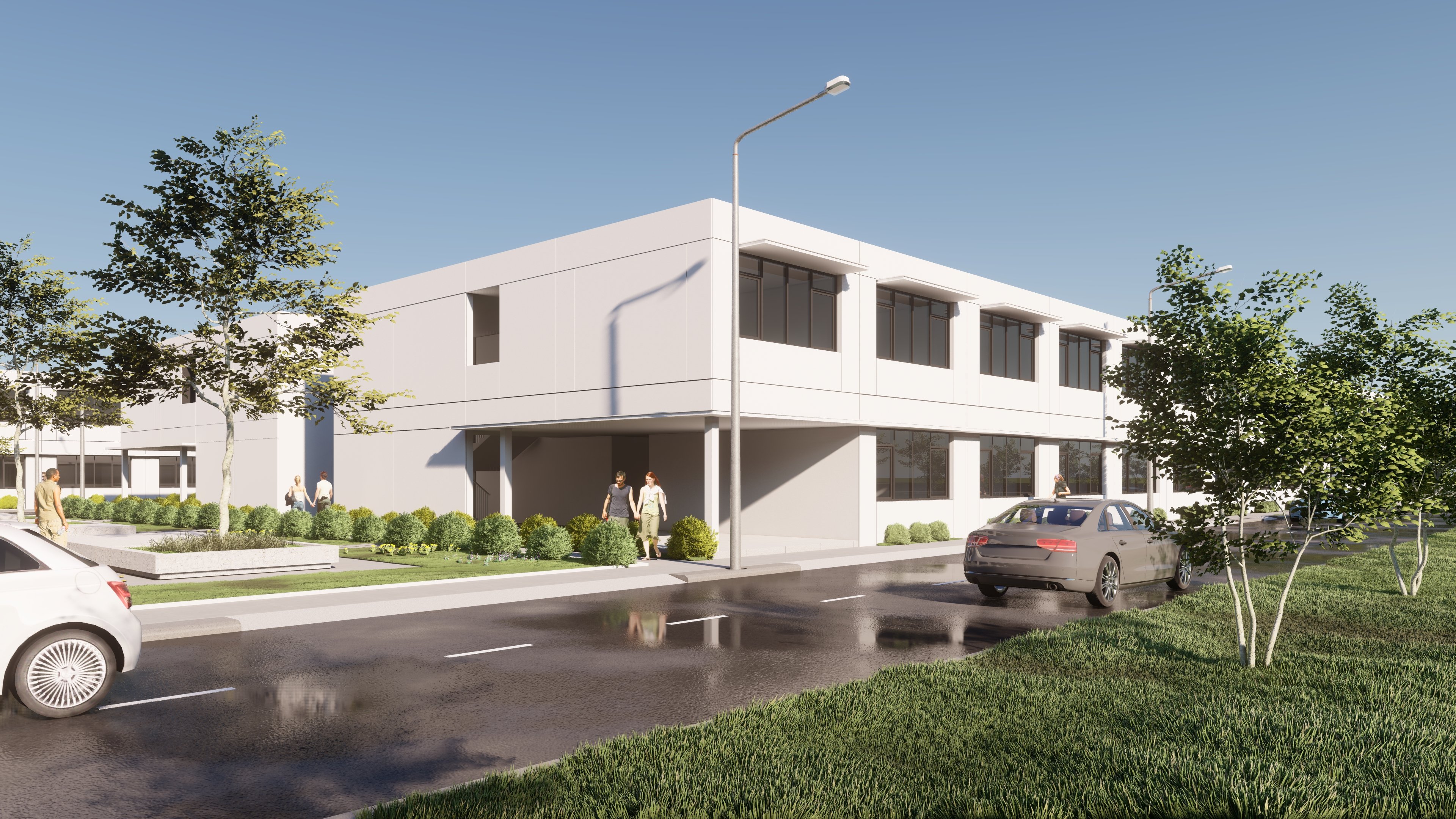
Worker housing & internal infrastructure — items coordinated within the overall delivery plan
5. Value delivered
Combining design consultancy and project management under a single point of responsibility helps the developer close the gap between concept and site: a coherent plan, a standardised technical documentation set and a feasible, controllable delivery programme. For a large, multi-typology project like the 14-hectare Bavet development, this is precisely what ensures architectural consistency, cost efficiency and schedule reliability — the foundation for a complete urban district whose value endures over time.